Publication
·
Designing for the Second Decade: What Maintenance Budgets Really Buy
Elena Voss
·
Understory Field Notes
·
12 min

A park is judged on its opening day and lived in for decades. The gap between those two facts is where most public landscapes quietly fail.
What we compared
We revisited eight projects, all between nine and fourteen years old, and lined up their construction budgets against whatever stewardship funding survived after the ribbon cutting.
What made the difference
The projects that still look and work like their drawings share one thing: a modest annual budget, usually one to two percent of construction cost, with someone named as responsible for spending it. Better paving, thicker steel and larger tree stock made far less difference.
Where that budget did not exist, the same pattern repeated: invasive species returned in year three, understory planting thinned by year five, and by year eight the landscape needed capital works again.
What we now ask for
We write a stewardship plan into every project, with a first-decade cost estimate, and we say plainly which parts of the design depend on it. If the money is not there, we simplify the design rather than hope.

More insights

·
Understory
Lindebo Cloudburst Boulevard Holds Its First Major Storm
When 68 mm of rain fell on Lindebo in under two hours, the boulevard's granite channel carried the water to the harbour and not a single basement on the street flooded.
·
Understory Field Notes
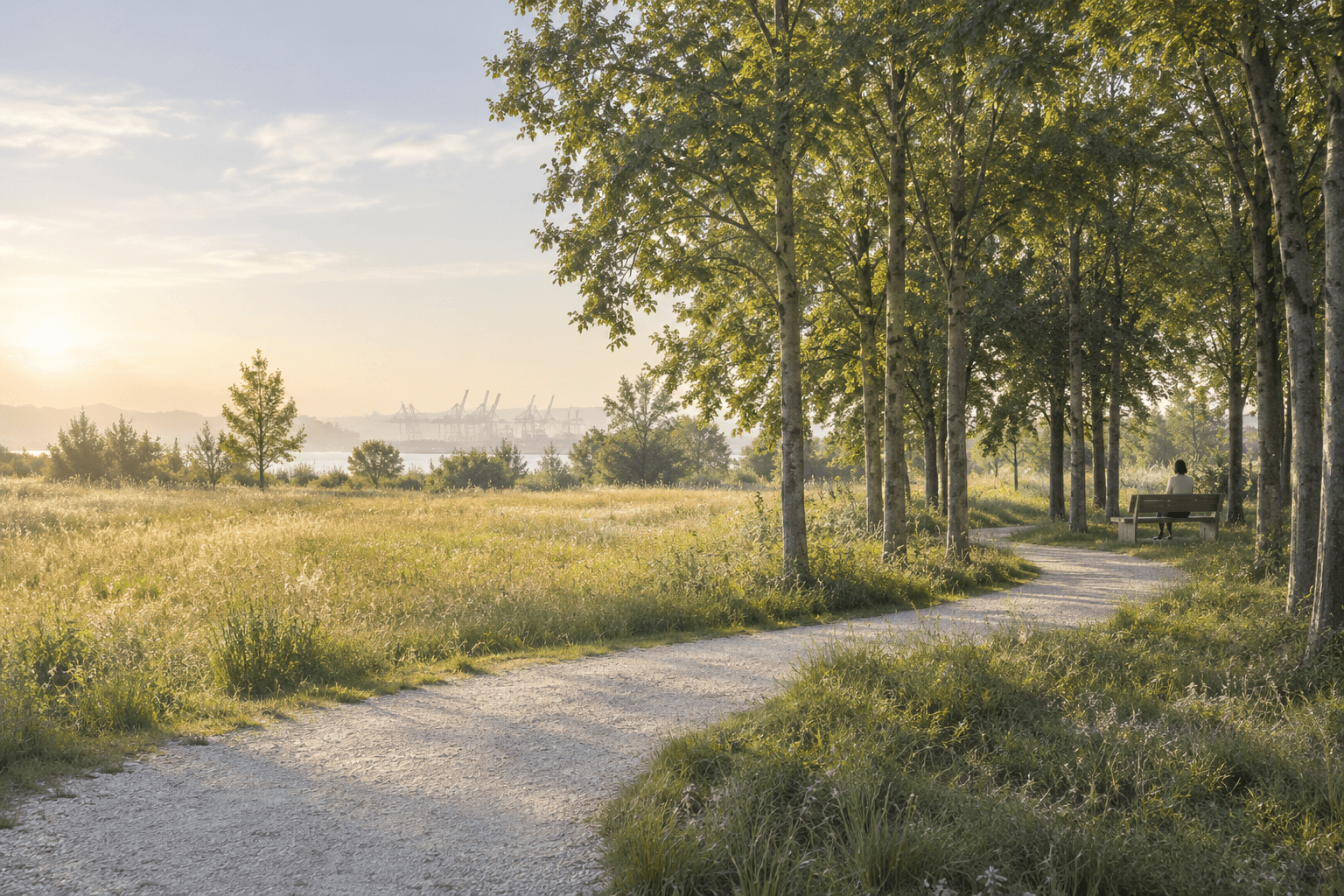
Shade Before Streets: Lessons from a Three-Typology Cooling Forest
Three summers of sensor data from the Alderway Cooling Forest show that how trees are arranged matters almost as much as how many are planted. Dense groves cooled the ground by up to 9°F, but the savanna layout kept people in the shade longest.

·
Understory
Kiln Creek Marsh Records Its First Nesting Pair
Four years after planting, volunteers have confirmed a pair of nesting marsh wrens in the restored cordgrass at Kiln Creek, a first for this stretch of the waterway.