Publication
·
Shade Before Streets: Lessons from a Three-Typology Cooling Forest
Daria Okafor, Hana Sato
·
Understory Field Notes
·
11 min
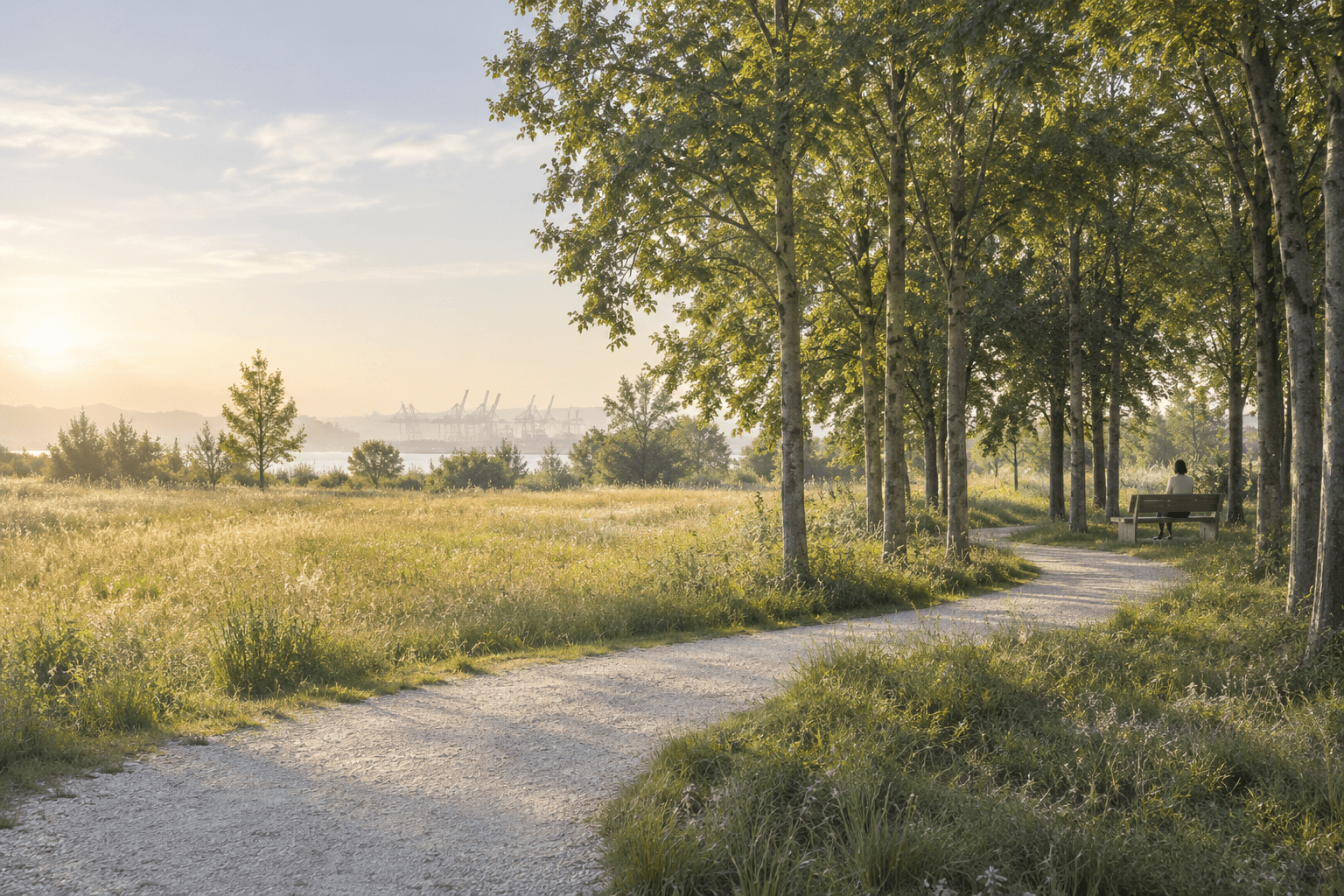
When we planted 1,200 trees in Seattle's Alderway neighbourhood, we did not plant them one way. We planted them three ways, side by side, and wired the site with temperature sensors to find out which layout actually keeps people cool.
Three ways to plant a forest
The dense grove packs young trees closely, the way a natural forest regenerates. The savanna spaces trees widely over meadow, with benches in the gaps. The allée lines trees along the main walking route.
What the data showed
On the hottest afternoons, the dense grove cooled the ground surface by up to 9°F compared with the open lawn next door. But people rarely went inside it. The savanna cooled the ground less, about 6°F, yet it was where residents actually sat, walked dogs and met neighbours.
The allée did something neither of the others could: it made the walk to the bus stop bearable.
What we would do next time
Cooling is not only a canopy number. It depends on whether shade lands where people already are. On our next heat-resilience projects, we will map daily routes and gathering spots first, and then choose the planting pattern for each one.
The full dataset and planting specifications are available on request.

More insights

·
Understory
Lindebo Cloudburst Boulevard Holds Its First Major Storm
When 68 mm of rain fell on Lindebo in under two hours, the boulevard's granite channel carried the water to the harbour and not a single basement on the street flooded.

·
Understory
Kiln Creek Marsh Records Its First Nesting Pair
Four years after planting, volunteers have confirmed a pair of nesting marsh wrens in the restored cordgrass at Kiln Creek, a first for this stretch of the waterway.

·
Understory Field Notes
Designing for the Second Decade: What Maintenance Budgets Really Buy
Most landscapes are funded to open, not to last. Comparing eight of our projects at year ten shows that a small annual stewardship budget changes the outcome more than any material upgrade at construction.