Publication
·
Living Shorelines: Rethinking the Coastal Edge
Elena Voss
·
Coastal Practice Review
·
9 min
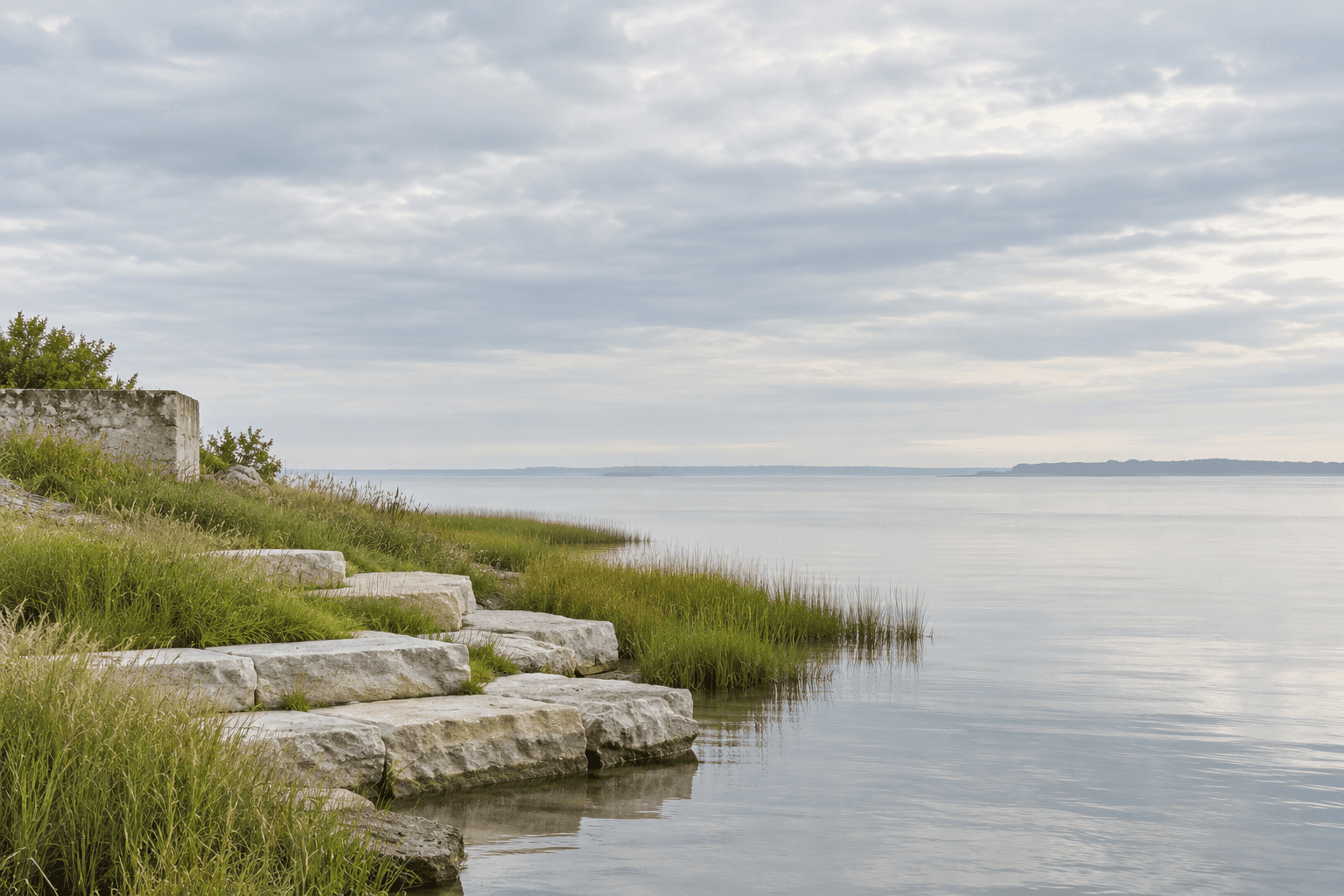
For most of the last century, the default answer to a rising coastline was a hard edge: steel bulkheads, concrete seawalls and riprap. They hold a line, but they also reflect wave energy, scour the seabed in front of them and cut people off from the water.
What a living shoreline does differently
A living shoreline works with the edge instead of against it. Marsh grasses, oyster reefs, stone sills and gentle slopes absorb wave energy gradually, trap sediment and rebuild themselves after storms. They also create habitat and, just as importantly, a place where people can reach the water.
Where it works, and where it doesn't
Living shorelines are not a universal fix. They need space to spread, the right wave exposure and patience while plants establish. On high-energy coasts or tight urban sites, the best answer is often a hybrid: a stone sill offshore, marsh planting behind it and a lower wall set back from the water.
Designing for change
The most important shift is in how we define success. A bulkhead is finished the day it is built. A living shoreline is designed to move, grow and adapt with rising water, and our job is to set it up to do that well for decades.

More insights

·
Understory
Lindebo Cloudburst Boulevard Holds Its First Major Storm
When 68 mm of rain fell on Lindebo in under two hours, the boulevard's granite channel carried the water to the harbour and not a single basement on the street flooded.
·
Understory Field Notes
Shade Before Streets: Lessons from a Three-Typology Cooling Forest
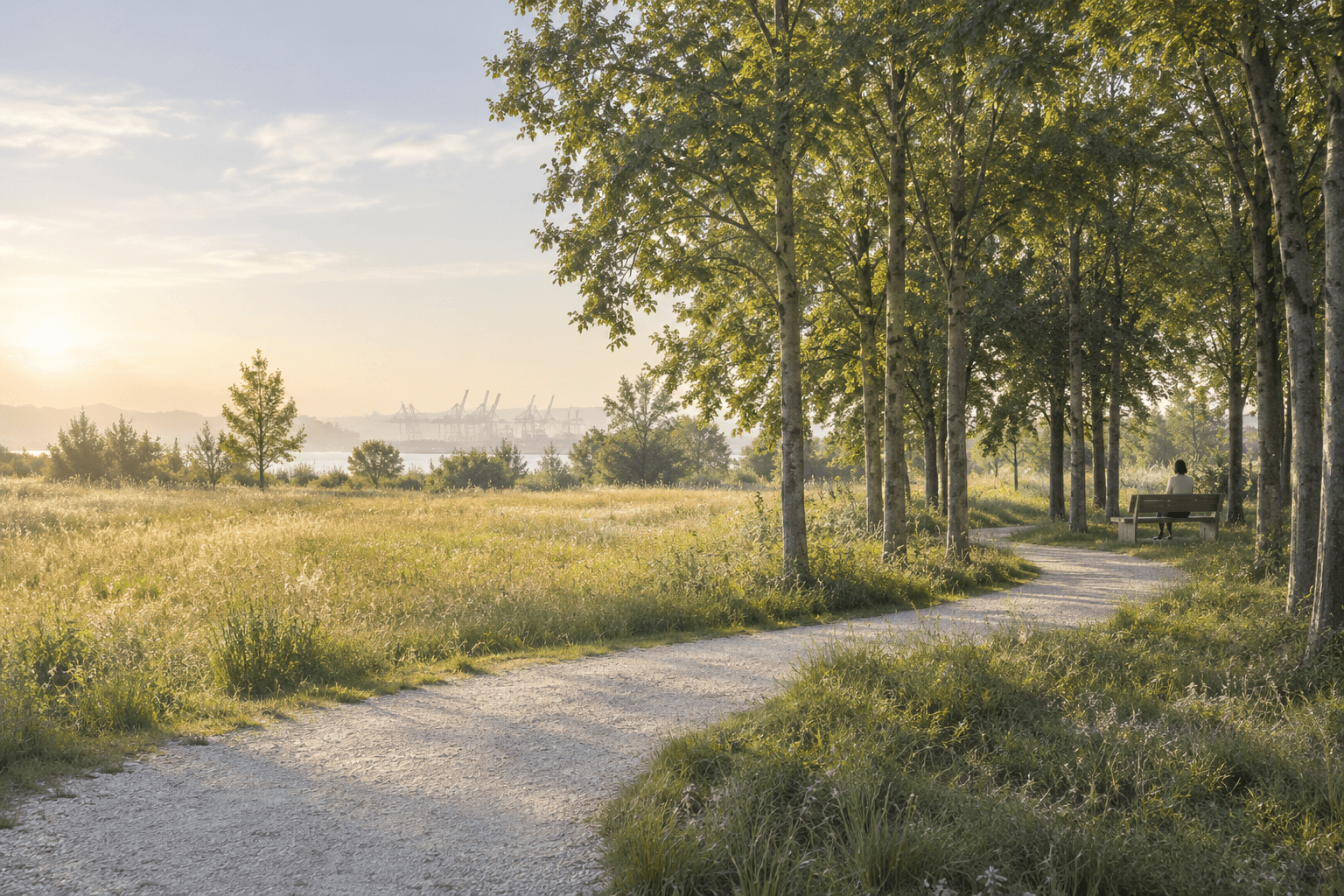
Three summers of sensor data from the Alderway Cooling Forest show that how trees are arranged matters almost as much as how many are planted. Dense groves cooled the ground by up to 9°F, but the savanna layout kept people in the shade longest.

·
Understory
Kiln Creek Marsh Records Its First Nesting Pair
Four years after planting, volunteers have confirmed a pair of nesting marsh wrens in the restored cordgrass at Kiln Creek, a first for this stretch of the waterway.